Research

I study how consumers navigate changing market structures and emerging technologies.

My research examines how consumers experience, evaluate, and respond to digital and technology-enabled market offerings. Across my work, I am particularly interested in what happens when new forms of convenience also change consumers’ sense of control, ownership, trust, and well-being.

Research agenda

Two streams, connected by how markets are changing.

Subscription Economy

Recurring consumption and the changing meaning of ownership

One stream of my research examines subscription models and recurring consumption from the consumer’s perspective. I study how managing multiple recurring commitments can create cognitive, emotional, and financial burden, how consumers respond when subscriptions become difficult to manage, and which features of subscription systems make those experiences more or less stressful.

I am also interested in how subscription models reshape consumers’ relationships with products they believe they own. When access to features embedded in physical products remains controlled by the firm, questions of price fairness, psychological ownership, and consumer control become increasingly important.
Emerging Technologies

How consumers make sense of intelligent technologies

A second stream examines consumer responses to emerging technologies, particularly artificial intelligence and robotics. I am interested in how people evaluate technologies whose capabilities and consequences are still evolving, and how expectations about the future shape reactions in the present.

This work considers the roles of emotion, trust, perceived usefulness, and expectations in technology acceptance. More broadly, I study how different forms of intelligent technology can invite different interpretations of what the technology is capable of doing and what it means for consumers.

Research approach

One question, many instruments.

My research is problem-focused, and problems rarely respect a single method. Depending on what a question needs, I listen through interviews and netnography, test through experiments and surveys, mine text at scale, or observe attention and emotion through eye-tracking and biometric measures.

Listening In-depth interviews Netnography Interpretive analysis
Testing Lab & online experiments Scenario-based designs Survey research
Measuring at scale Text analysis & topic modeling Eye-tracking & biometrics Meta-analysis

I often combine methods so that one form of evidence can inform another: qualitative work can reveal the experiences worth testing, computational analysis can uncover patterns at scale, and experiments can isolate the mechanisms behind those patterns.

Computational methods

Finding patterns in consumer language.

Text analysis allows me to examine consumer experiences at a scale that would be difficult to capture through traditional qualitative methods alone. I use computational approaches such as sentiment analysis and topic modeling to identify recurring themes, patterns, and differences in large bodies of consumer-generated text.

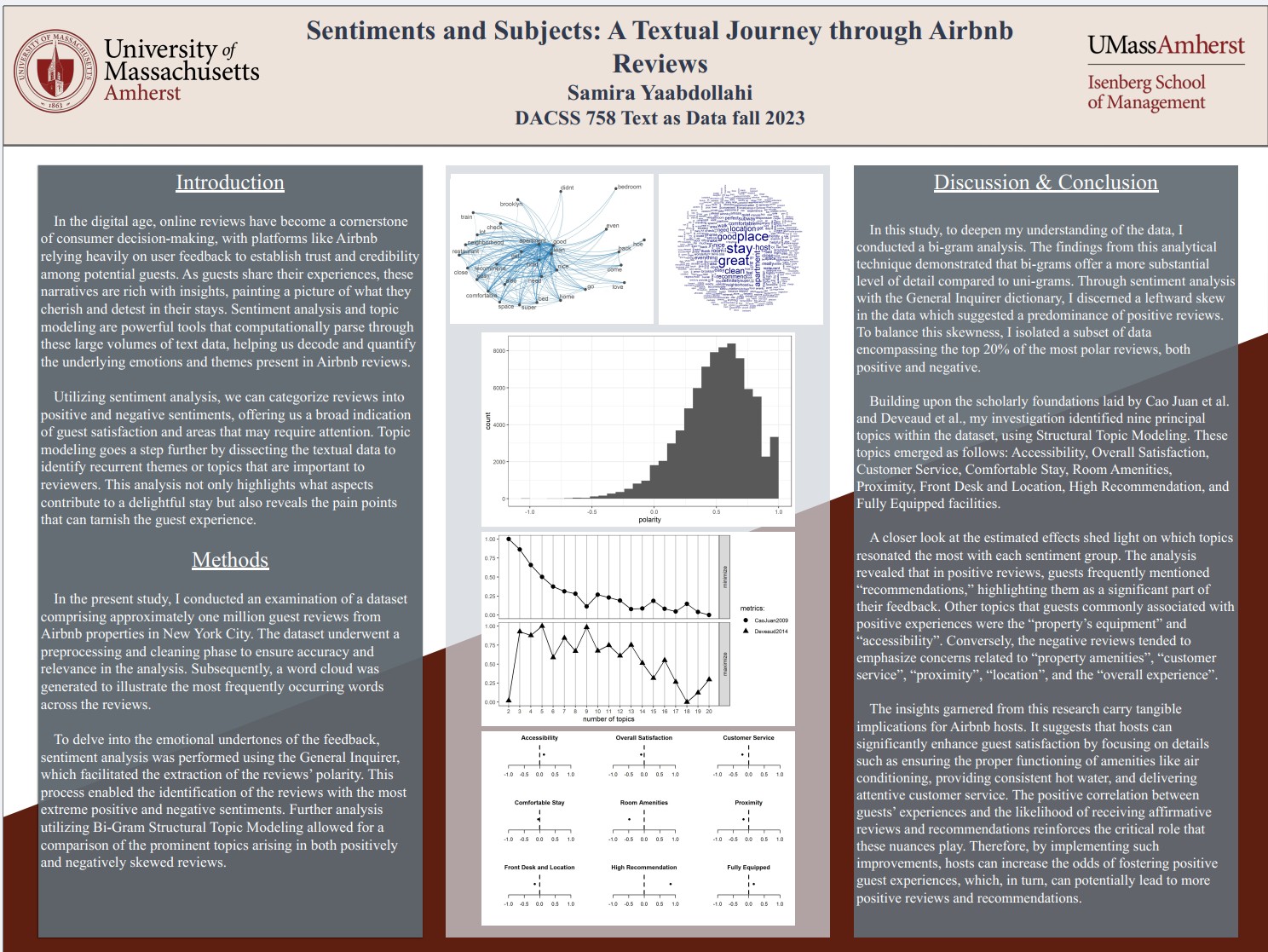
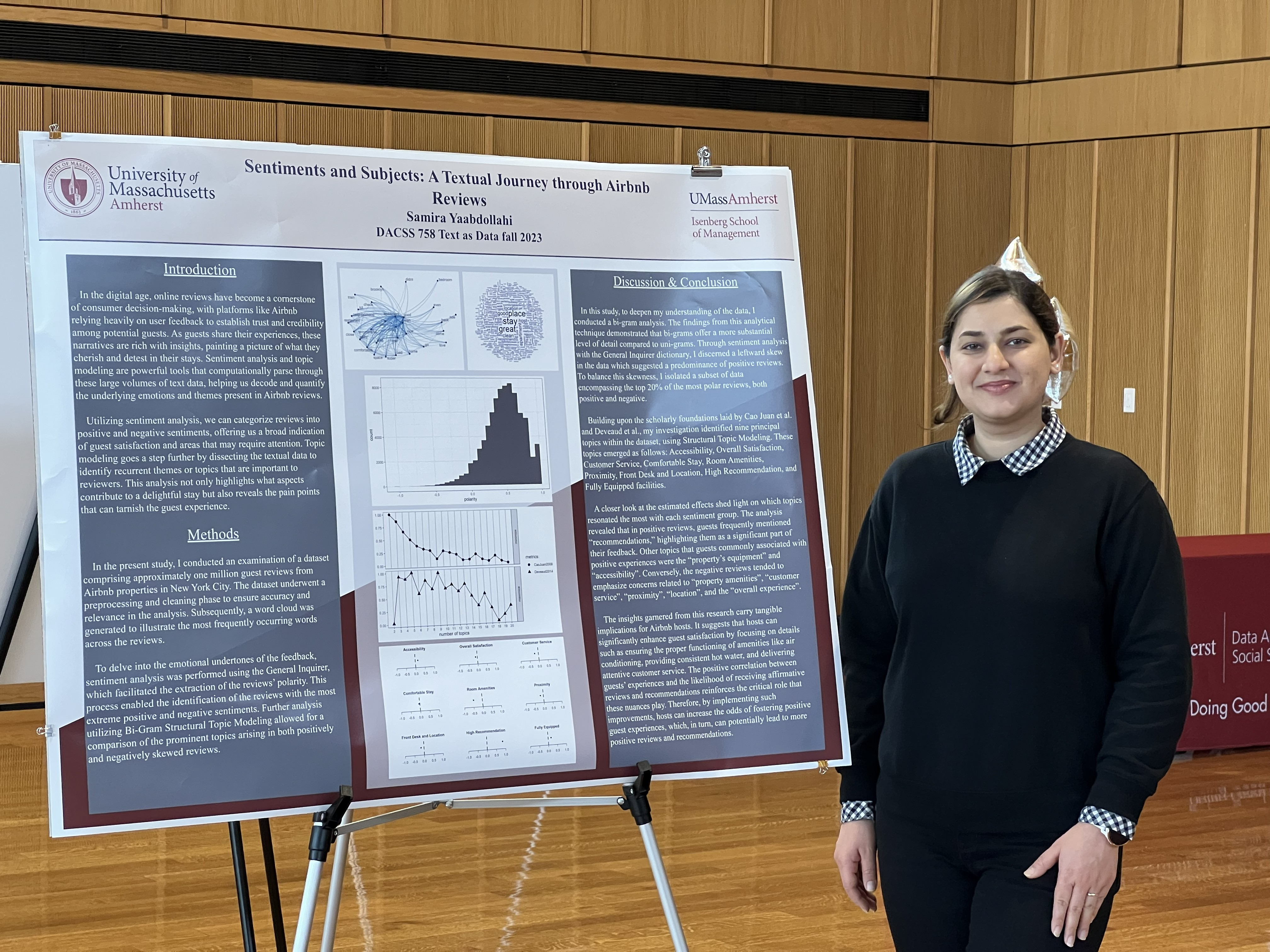
In one project, I analyzed approximately one million Airbnb reviews from New York City. The analysis combined sentiment analysis, bi-grams, and structural topic modeling to examine the subjects associated with positive and negative guest experiences.

Presented at the Data Analytics and Computational Social Science (DACSS) Student Research Symposium.

Poster titled Sentiments and Subjects: A Textual Journey through Airbnb Reviews
Presenting text analysis research at the DACSS Student Research Symposium
iMotions Lab · UMass Amherst

Where attention becomes data.

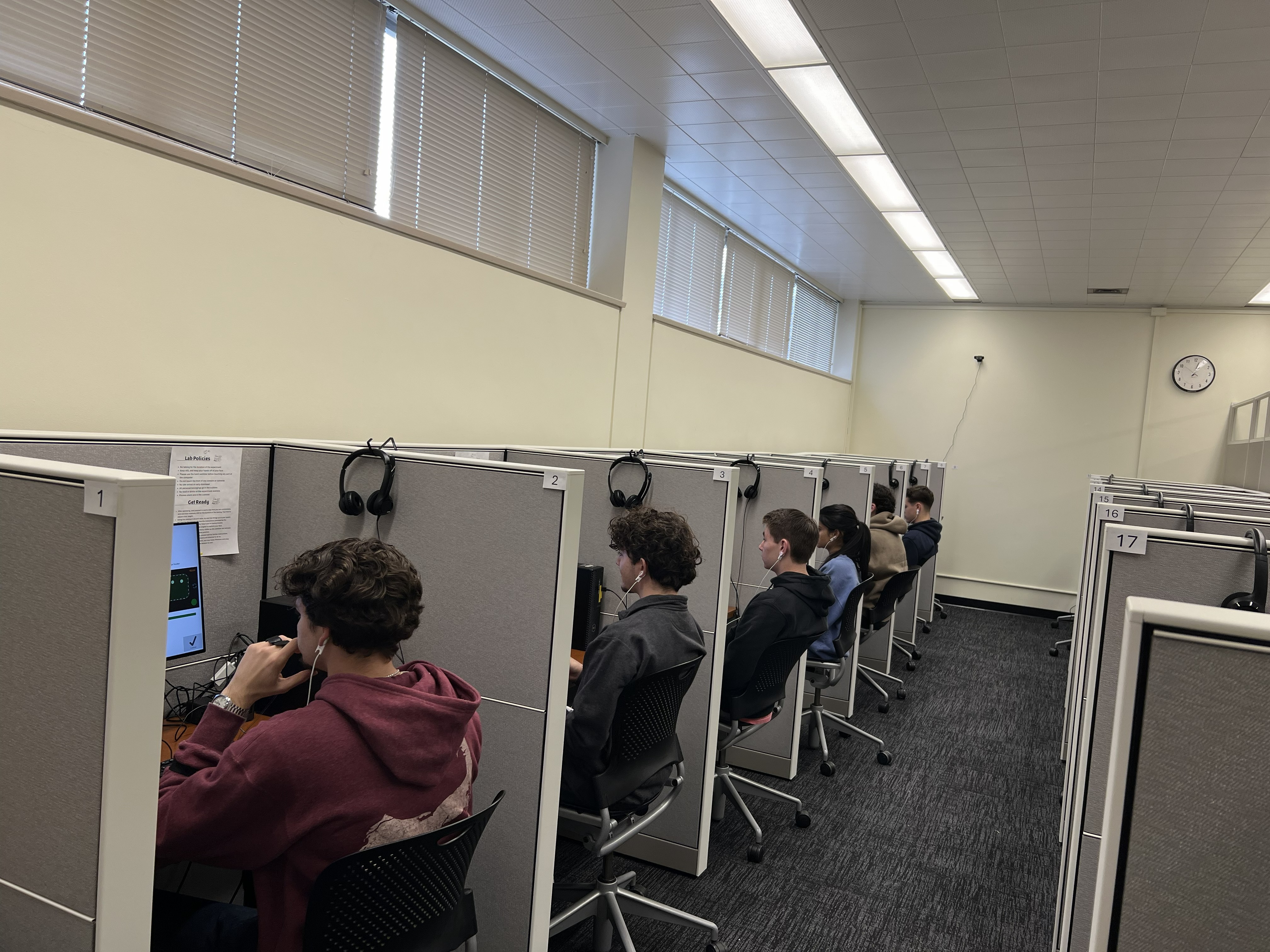
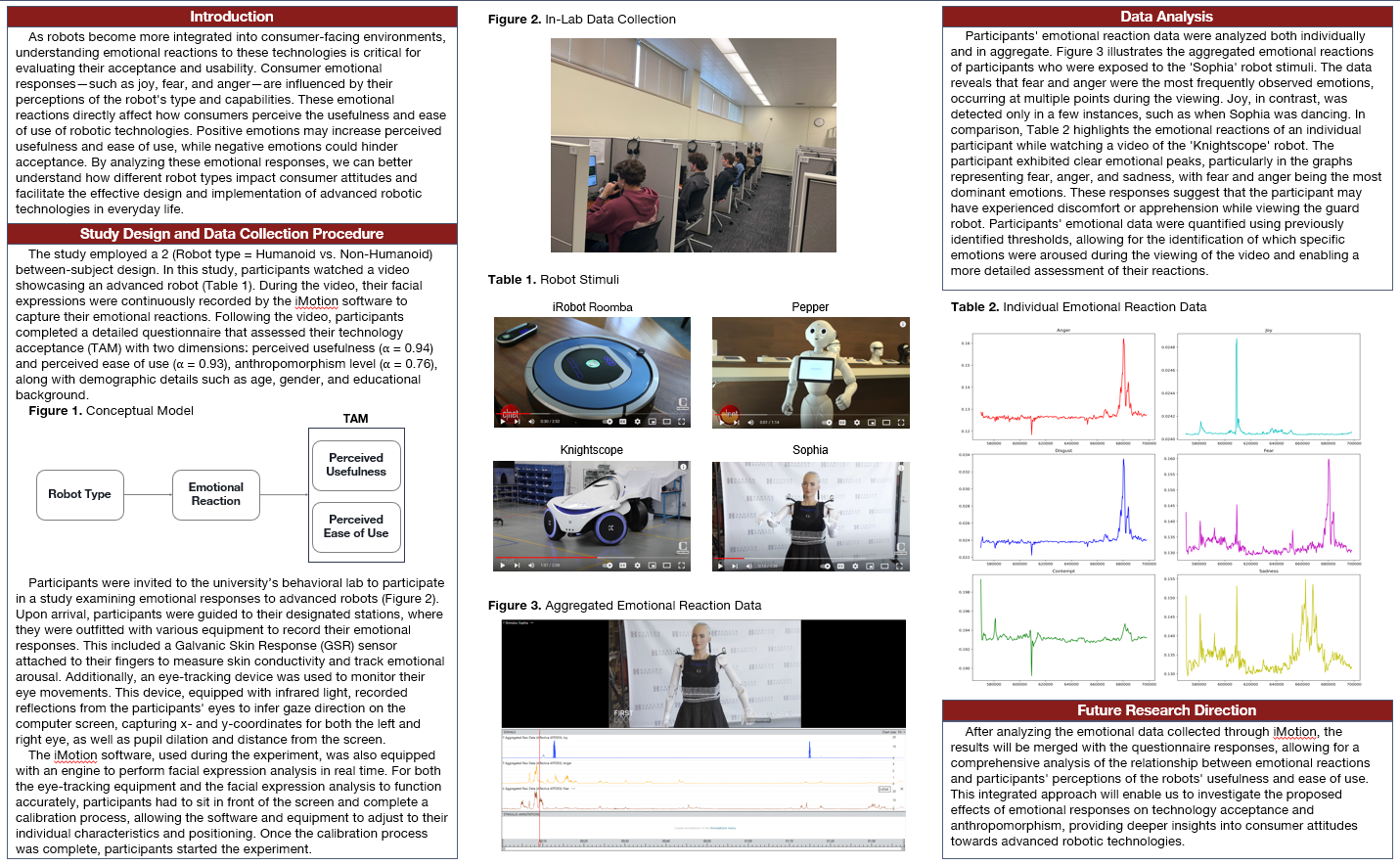
At Isenberg’s iMotions biometric lab, I have used eye-tracking and physiological measures to complement consumers’ self-reported responses. This work allows me to examine reactions that may be difficult to capture through survey measures alone and to connect observed responses with consumers’ reported attitudes and emotions.

My role has included designing the study, managing lab sessions, and analyzing biometric data.

Participant completing an eye-tracking study in the iMotions lab
Research materials from an iMotions biometric study
Research in conversation

Sharing the work along the way.

Conferences give me a chance to put developing ideas in conversation with other researchers and to see the work from new perspectives.

2026

Savannah, Georgia · May 2026

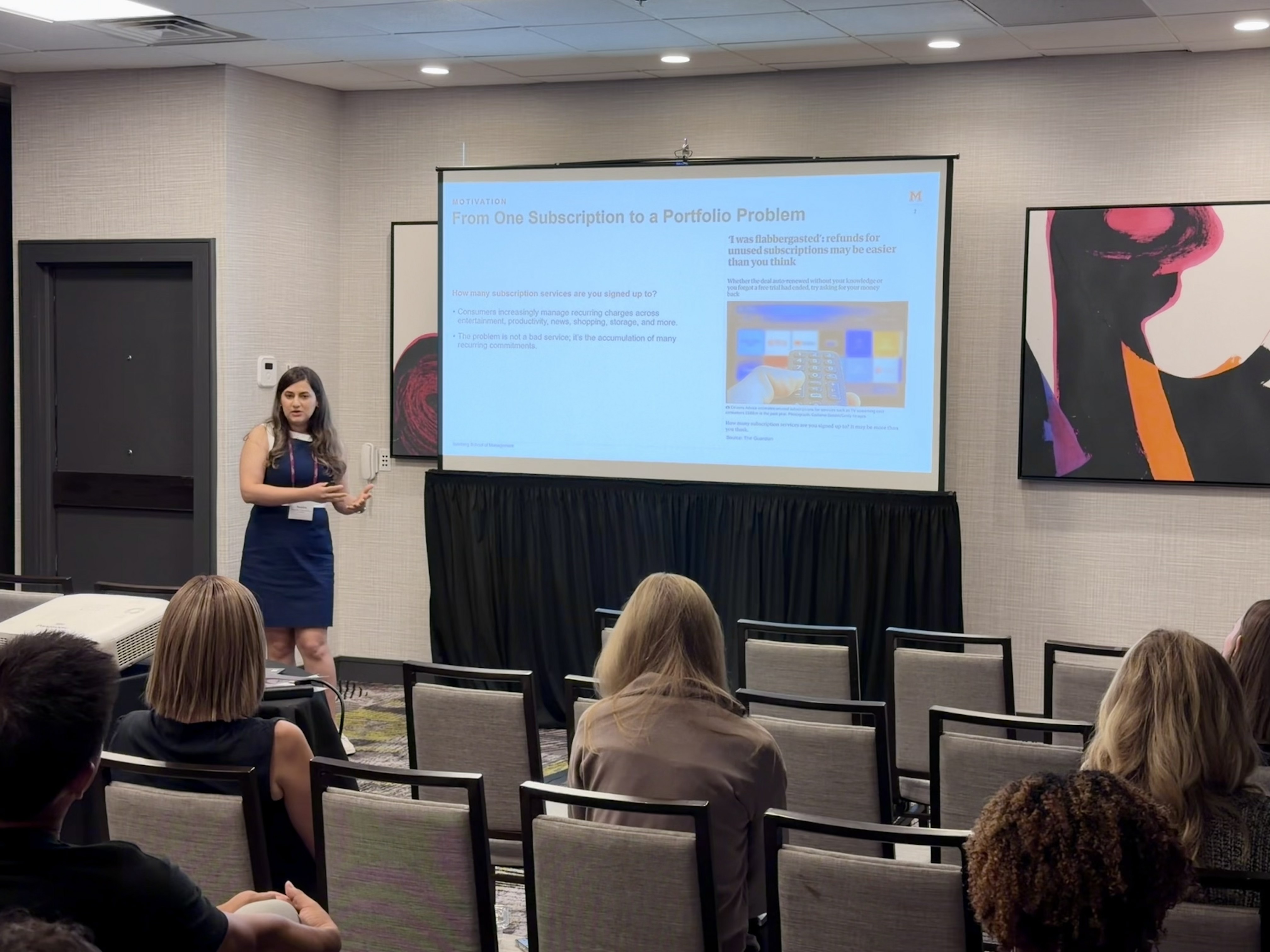
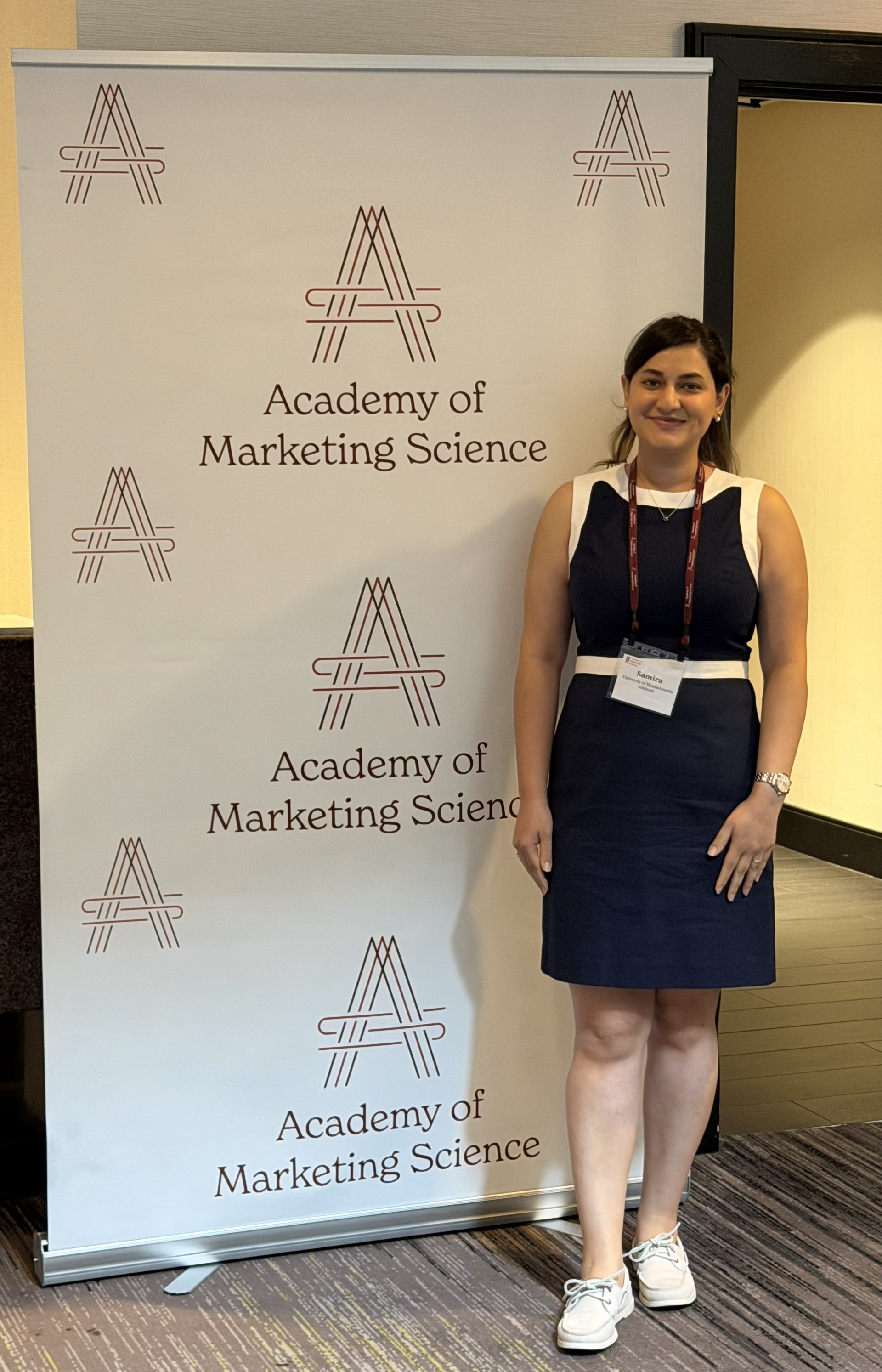
The Burden of Recurring Consumption: Mapping Subscription Fatigue and How People Cope

Academy of Marketing Science Annual Conference

2024

Nashville, Tennessee · March 2024

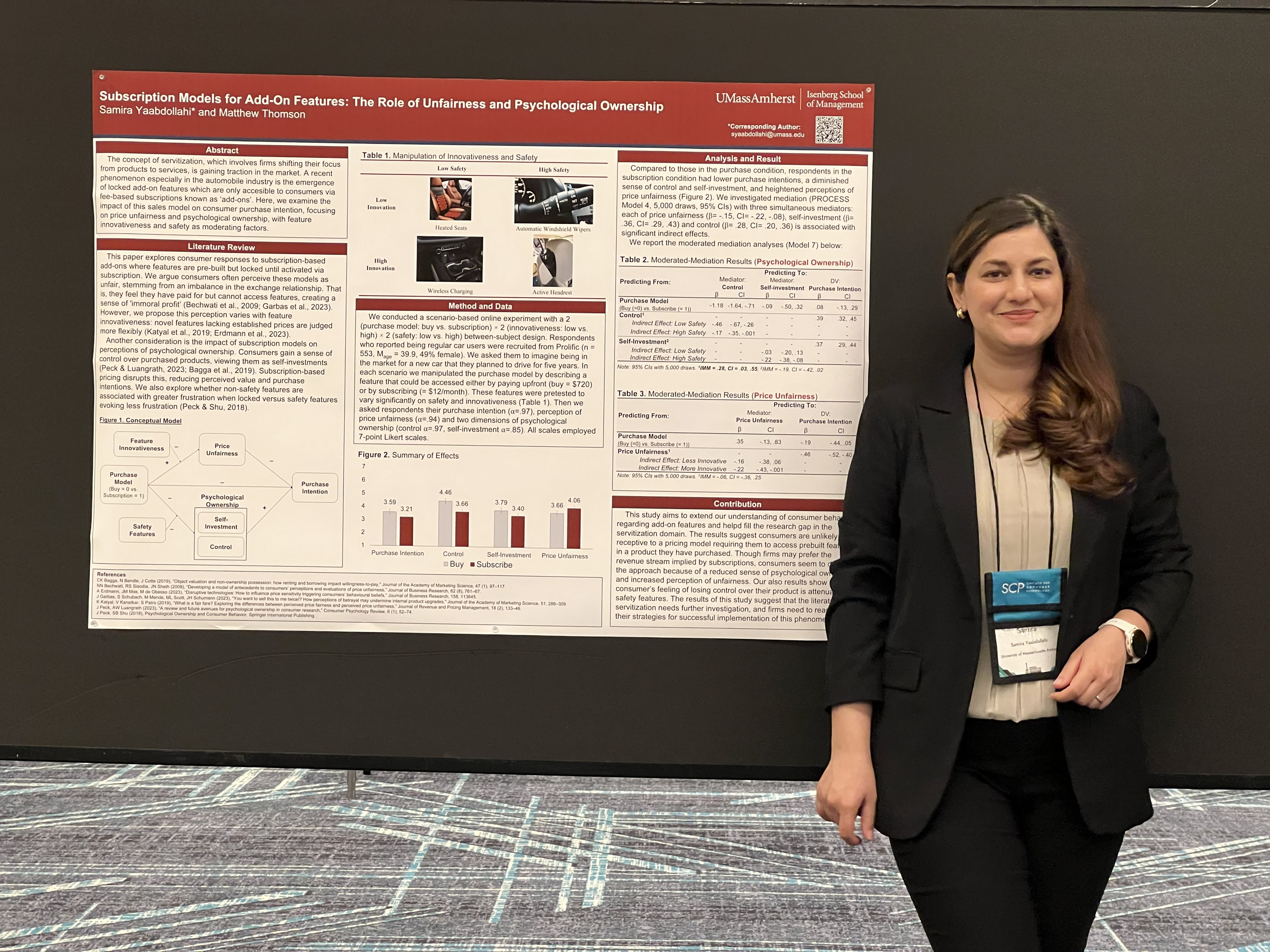
Subscription Models for Add-On Features: The Role of Unfairness and Psychological Ownership

Society for Consumer Psychology Conference

Presenting research at the Society for Consumer Psychology Conference in Nashville
2024

St. Pete’s Beach, Florida · February 2024

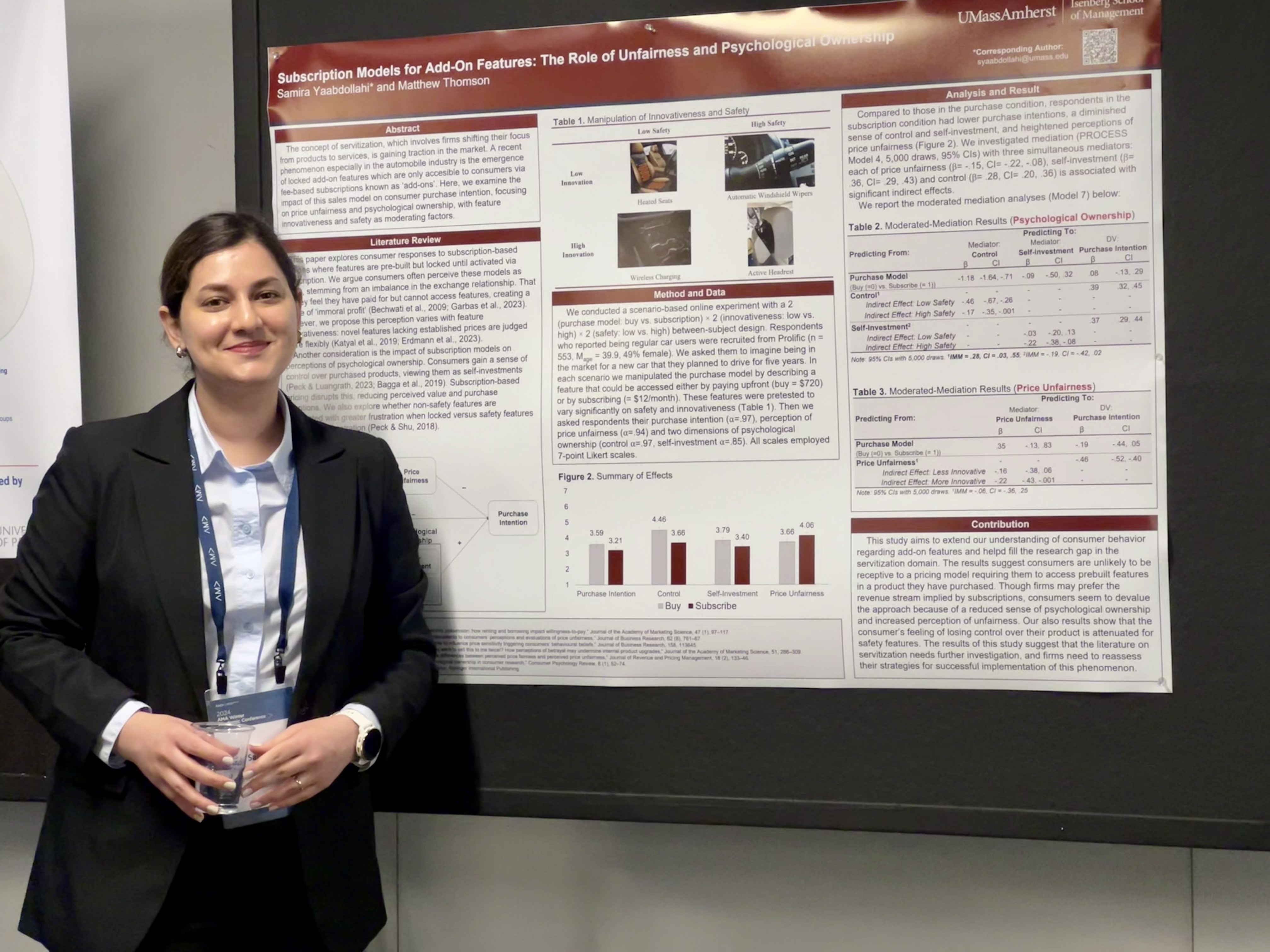
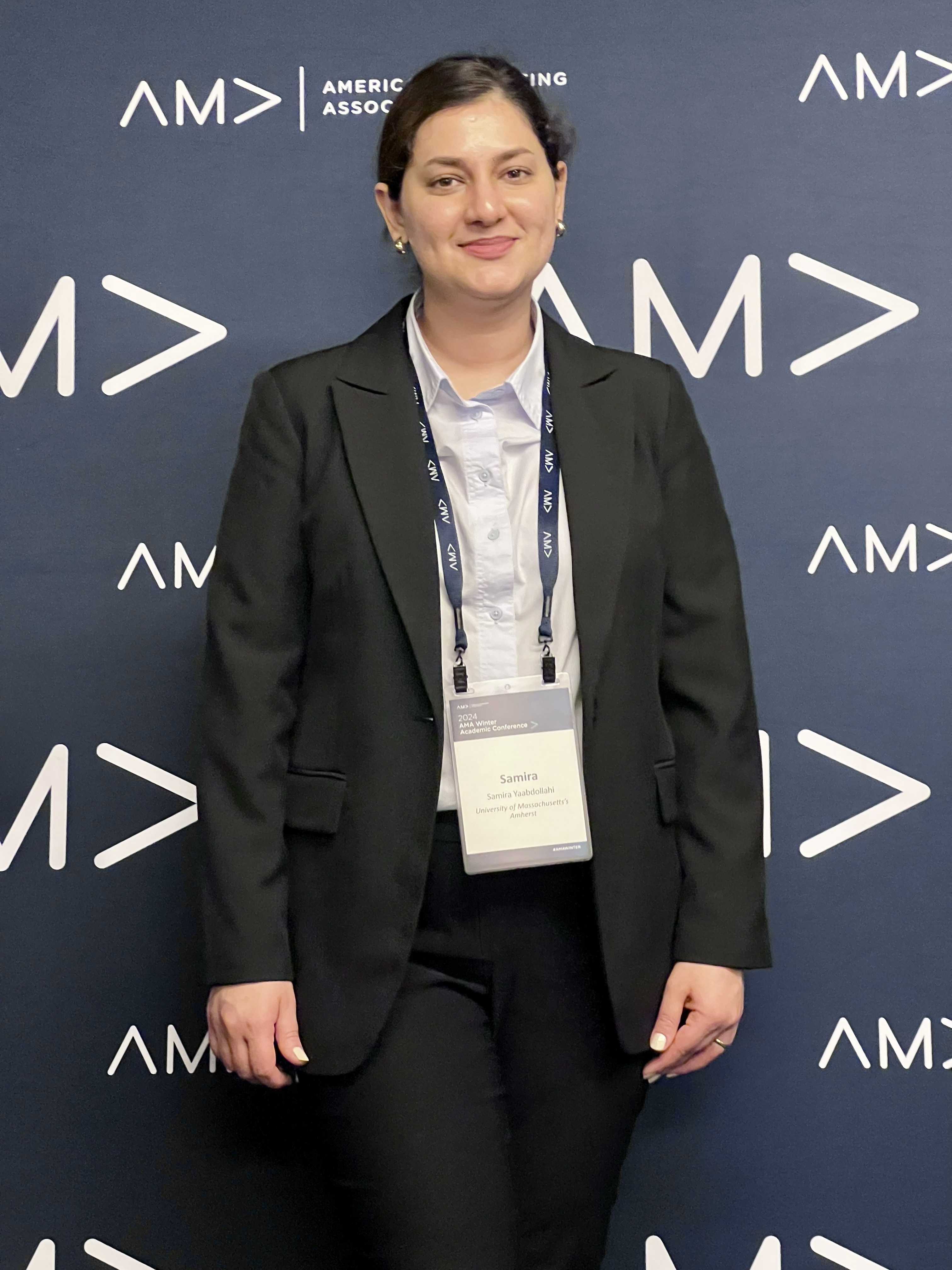
Subscription Models for Add-On Features: The Role of Unfairness and Psychological Ownership

AMA Winter Academic Conference

✳